
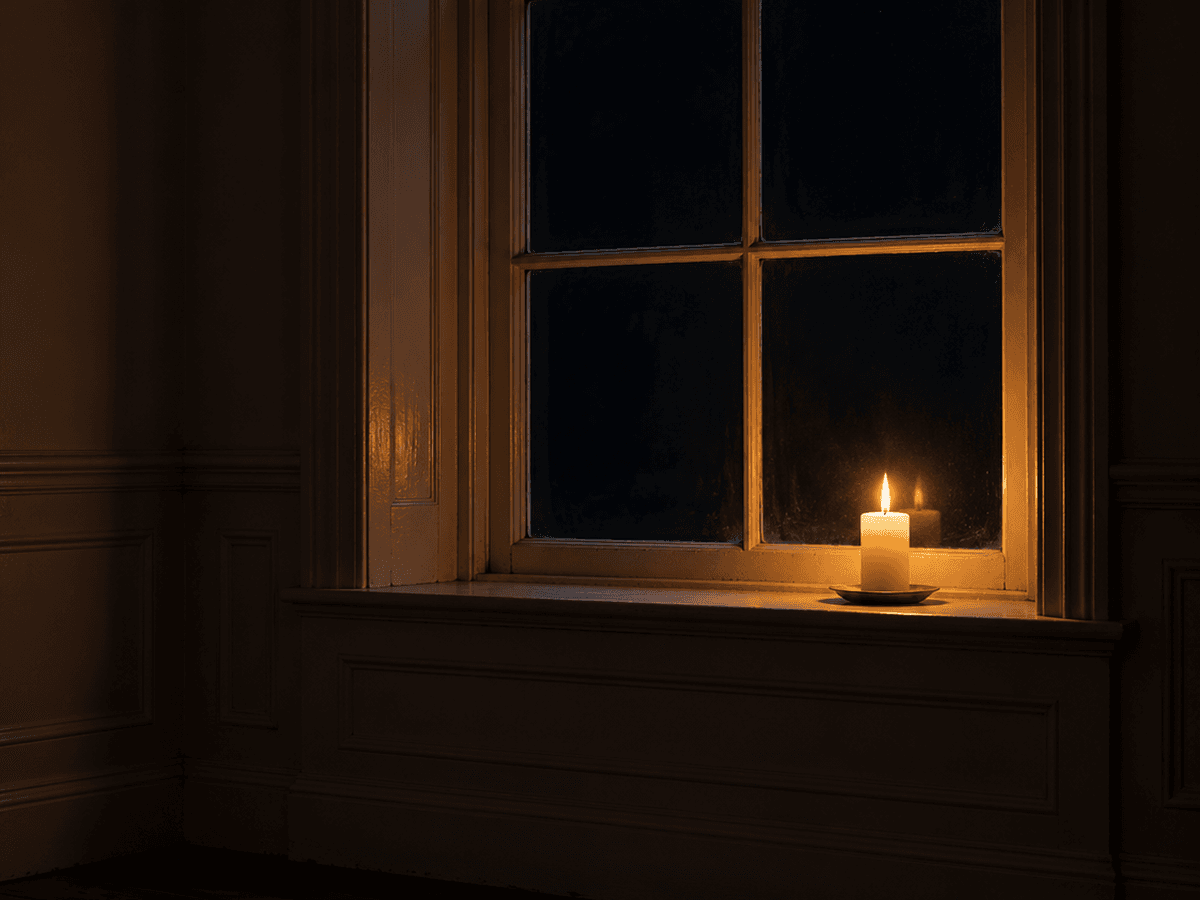
“I thank whatever gods may be / For my unconquerable soul.” — Invictus, William Ernest Henley
Most of us give thanks when something goes right: the test result comes back clear, the job comes through, the storm passes. William Ernest Henley’s Invictus does something stranger. Its third and fourth lines offer thanks while the speaker is still inside the night the poem opens with. Read the full poem and you’ll see that nothing has improved by the time he says it. The darkness is still total. He gives thanks anyway.
Thanks before rescue
Gratitude usually follows relief. Here it comes first. The speaker hasn’t been pulled out of anything; he has only noticed what is still his. That changes what gratitude is for. It isn’t a reward for things working out. It’s a way of standing inside things that haven’t.
To whom?
The phrase “whatever gods may be” is one of the most honest in the poem. Henley doesn’t claim to know who is listening, or whether anyone is, and he doesn’t need to. The thanks is real even when its address is uncertain. Many readers today live with that same uncertainty, and the line makes room for them: you can be grateful without being sure.
What he’s grateful for
It isn’t health or luck or a way out. He is grateful for his soul, and specifically for the fact that it can’t be conquered. It’s a claim about what remains when everything else is under threat: something in a person that circumstance can press on but not take.
Gratitude that doesn’t wait
We’re often told to count our blessings when life is kind. These two lines suggest a harder and more useful practice: to find, even on the worst night, one thing worth giving thanks for, and to say so out loud. For Henley, it was the part of him that would not give in.
Hear it sung
Invictus has also been set to music, for anyone who takes words in more easily by ear. You’ll find the song on the poem’s page, beside the full text.